Showing posts with label Informative. Show all posts

Saturday, July 20, 2013

Thursday, April 12, 2012

Baisakhi Festival 2012

Baisakhi Festival

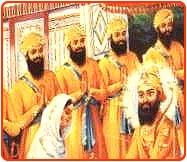
Baisakhi is one of the major festivals of Sikhs and is celebrated with lot of enthusiasm and gaiety in the state of Punjab and all throughout the world where there is a significant Sikh population. For the large farming community of Punjab, Baisakhi Festival marks the time for harvest of rabi crops and they celebrate the day by performing joyful bhangra and gidda dance. For the Sikh community, Baisakhi Festival has tremendous religious significance as it was on a Baisakhi Day in 1699, that Guru Gobind Singh, the tenth Sikh Guru laid the foundation of Panth Khalsa-the Order of the Pure Ones.

Date of Baisakhi
Baisakhi Festival falls on the first day of Vaisakh month (April-May) according to Nanakshahi or Sikh Calendar. For this reason, Baisakhi is also popularly known as Vaisakhi. According to English calendar, the date of Baisakhi corresponds to April 13 every year and April 14 once in every 36 years. This difference in Baisakhi dates is due to the fact that day of Baisakhi is reckoned according to solar calendar and not the lunar calendar. The auspicious date of Baisakhi is celebrated all over India under different names and different set of rituals and celebrations. Baisakhi date coincides with 'Rongali Bihu' in Assam, 'Naba Barsha' in Bengal, Puthandu in Tamil Nadu and 'Pooram Vishu' in Kerala.

Baisakhi Celebrations
People of Punjab celebrate the festival of Baisakhi with exuberance and devotion. As the festival has tremendous importance in Sikh religion, major activities of the day are organized in Gurdwaras. People wake up early to prepare for the day. Many also take bath in the holy river to mark the auspicious occasion. After getting ready people pay a visit to their neighbourdood gurdwara and take part in the special prayer meeting organized for the day. At the end of the Baisakhi ardas, congregates receive specially prepared Kara prasad or sweetened semolina. This is followed by a guru ka langar or community lunch.

Later, during the day people of Sikh faith take out a Baisakhi procession under the leadership of Panj piaras. The procession moves through the major localities of the city amidst the rendition of devotional songs by the participating men, women and children. Mock duels, bhangra and gidda performances make the procession joyous and colourful.

Celebrations by Farmers
For the large farming community of Punjab and Haryana, Baisakhi marks a New Year’s time as it is time to harvest rabi crop. On Baisakhi, farmers thank god for the bountiful crop and pray for good times ahead. People buy new clothes and make merry by singing, dancing and enjoying the best of festive food.

Cries of "Jatta aai Baisakhi", rent the skies as gaily men and women break into the bhangra and gidda dance to express their joy. Everyday farming scenes of sowing, harvesting, winnowing and gathering of crops are expressed through zestful movements of the body to the accompaniment of ballads and dhol music.

In several villages of Punjab Baisakhi Fairs are organized where besides other recreational activities, wrestling bouts are also held.

Sunday, March 25, 2012

Navratri - The 9 Divine Nights


Origin of Durga - The Mythology
 
Devi is the great goddess of the Hindus,the consort of Shiva and she is worshiped in various forms corresponding to her two aspects: benevolence and fierceness. She is Uma, "light"; Gauri, "yellow or brilliant"; Parvati, "the mountaineer"; and Jagatmata, "the-mother-of-the-world" in her milder guise. The terrible emanations are Durga "the inaccessible"; Kali, "the black"; Chandi, "the fierce"; and Bhairavi, "the terrible."
 
Descent of the Goddess

Durga, a beautiful warrior seated upon a tiger, was the first appearance of the great goddess. The circumstance of her miraculous arrival was the tyranny of the monster-demon Mahishasur, who through terrific austerities had acquired invincible strength. The gods were afraid of this water-buffalo bull because neither Vishnu nor Shiva could prevail against him. It seemed that the joint energy of Shakti was only capable of vanquishing Mahisha, and so it was the eighteen-armed Durga who went out to do battle.
 
Battlefield

She went to battle on her ferocious mount lion, armed with the weapons given to her by the other Gods. Durga is one of the angry and aggressive aspects of the goddess Shakti, whose role in Hindu mythology was to fight and conquer demons and also personify the Sakti or female aspect of any male deity. In the battle, she fought and killed the evil Mahishasura and restored heaven to the Gods. Since then the goddess is invoked for protection from the powers of evil. Durga Puja is observed in her honor, to celebrate her victory over evil.
 
Revered Mother

She has been worshiped from about 400 AD, but probably earlier, to the present. Her literary references are chiefly the Ramayana and Mahabharata, epic and Puranic texts, and she is mentioned by name in Vedic literature. In general, Durga is regarded in northern India as the gentle bride epitomizing family unity while in southern India she is revered more in her warrior aspect.
 
Dussehra
 
The festival of Dassehra, also known as Vijayadashmi, is one of the fascinating festivals of India and is celebrated with joy and enthusiasm. According to the great Hindu scripture, the Ramayana, Lord Rama performed chandi-puja (holy prayer). This was carried out in order to invoke the blessings of Durga Maa for the killing of Ravana, the ten-headed demon king of Sri Lanka who had abducted Seeta, wife of Lord Rama.
 
Durga Maa divulged the secret to Rama on how he could slay the great Ravana. Hence upon vanquishing the demon Ravana, Lord Rama with Sita and younger brother Laxmana, returned victorious to his kingdom of Ayodhya on the day which is called 'Diwali'. Revelers across northern India re-enact the legend at sundown in a performance called the Ramlila, featuring actors dressed as Rama shooting flaming arrows at effigies stuffed with firecrackers.
 
Dassera day is considered a most auspicious day. It is a time-honored belief that if any new venture is started on this day, it is bound to be successful. Hence, all the undertakings be it laying-in of foundation of a new building, opening of a new commercial establishment or even initiating a child into the world of learning- are started on this day. Also on this day implements of agriculture, manufacturer's machines, the intellectuals pens, the household articles, the children's school books are placed before the idol of Durga and worshiped.
 
The Bengali Belief

Sati, the consort of Shiva was the daughter of Daksha Prajaapati a descendant of Bhrama. Sati had married Shiva against the wishes of her father. Daksha was sponsoring a sacrifice and attendees came from various parts of the universe. He invited all of the gods and goddesses except his son in law Shiva. Against Shiva's wishes, Sati attended this sacrifice and was insulted by her father. Unable to bear this insult, Sati immolated herself.
 
Enraged at the insult and the injury, Shiva destroyed Daksha's sacrifice, cut off Daksha's head and when pleaded by other gods, replaced it with that of a goat and restored him to life. Still berserk with grief, he picked up the remains of Sati's body, and danced the dance of destruction throughout the Universe. The other gods intervened to stop this dance, and the disk of Vishnu cut through the corpse of Sati, whose various parts of the body fell at several spots all through the Indian subcontinent and formed the sites of what are known as Shakti Peethas today.
 
Shiva was finally pacified when the last piece fell off from his shoulder. Narayana revived sati as Uma for a new life. Ever since peace was restored, Uma, with her children, Ganesh and Kartick, and with her two 'sakhis' - Jaya and Bijaya, comes to visit her parent's home each year during the season of 'Sharat' or autumn when Durga Puja is celebrated.
 
Mahalaya

Mahalaya ushers in the aura of Durga Puja. The countdown for the Durga Puja begins much earlier, from the day of 'Janmastami'. It is only from the day of Mahalaya that the preparations for the Durga Puja reaches the final stage. The midnight chants of various hymns of 'Mahishasura Mardini' reminds one of the beginning of Durga Puja.
 
Mahalaya is an auspicious occasion observed seven days before the Durga Puja, and heralds the advent of Durga, the goddess of supreme power. It's a kind of invocation or invitation to the mother goddess to descend on earth - "Jago Tumi Jago". This is done through the chanting of mantras and singing devotional songs.
 
The day of Mahalaya is also the day of remembrance. On this day, people offer 'tarpan' in memory of their deceased forefathers. The banks of River Ganga becomes a sea of humanity. Priests are seen busy performing 'Tarpan' for devotees in groups. The rituals start from early down and end during the midday. Devotees and worshipers buy clothes and sweets to offer to their forefathers. 'Tarpan' is to be performed in empty stomach. After offering 'tarpan', people eat at the same place.

Friday, March 2, 2012

The Art of Giving...


"Rivers do not drink their own water, nor do tree eat their own fruit, nor do rain clouds eat the grains reared by them. The wealth of the noble is used solely for the benefit of others!
Even after accepting that giving is good and that one must learn to give, several questions need to be answered.

The first question is:
When should one give?

We all know the famous incident from Mahabharat.
Yudhisthir asks a beggar seeking alms to come the next day. On this, Bhim rejoices that Yudhisthir his brother, has conquered death! For he is sure that he will be around the next day to give. Yudhisthir gets the message.
One does not know really whether one will be there tomorrow to give!
The time to give, therefore, is now.

The next question is:
'How much to give?'

One recalls the famous incident from history.
Rana Pratap was reeling after defeat from the Moghals. He had lost his army, he had lost his wealth, and most important, he had lost hope, his will to fight. At that time, in his darkest hour, his erstwhile minister, Bhamasha, came seeking him and placed his entire fortune at the disposal of Rana Pratap. With this, Rana Pratap raised an army and lived to fight another day.

The answer to this question how much to give is:
"Give as much as one can!

The next question is:
'What to give?'

It is not only money that can be given away. It could be a flower or even a smile.

It is not how much one gives but how one gives that really matters. When you give a smile to a stranger that may be the only good thing received by him in days and weeks!

"You can give anything but you must give with all your heart!"

One also needs answer to this question 
Whom to give?

Many times we avoid giving by finding fault with the person who is seeking. However, being judgmental and rejecting a person on the presumption that he may not be the most deserving, is not justified.

“Give without being judgmental!"

Next we have to answer:
'How to give?'

Coming to the manner of giving, one has to ensure that the receiver does not feel humiliated, nor the giver feels proud by giving.

In giving, follow the advice 'Let not your left hand know what your right hand gives? Charity without publicity and fanfare is the highest form of charity.'
'Give quietly!'
While giving, let not the recipient feel small or humiliated. After all, what we give never really belonged to us. We come to this world with nothing and will go with nothing. The thing gifted was only with us for a temporary period. Why then take pride in giving away something which really did not belong to us?
Give with grace and with a feeling of gratitude.

"What should one feel after giving?"

We all know the story of Eklavya. When Dronacharya asked him for his right thumb as "Guru Dakshina, he unhesitatingly cut off the thumb and gave it to Dronacharya.
There is a little known sequel to this story.
Eklavya was asked whether he ever regretted the act of giving away his thumb. He replied, and the reply has to be believed to be true, as it was asked to him when he was dying.

His reply was "Yes! I regretted this only once in my life. It was when Pandavas were coming in to kill Dronacharya who was broken hearted on the false news of death of his son, Ashwathama, and had stopped fighting. It was then that I regretted the loss of my thumb. If the thumb was there, no one could have dared hurt my Guru?

The message to us is clear.
Give and never regret giving!

And the last question is:
‘How much should we provide for our heirs?'

Ask yourself 'are we taking away from them the gift of work? - A source of happiness?
The answer is given by Warren Buffett:
"Leave your kids enough to do anything, but not enough to do nothing!"

I would conclude by saying:

Let us learn the Art of Giving,
and quoting the Saint Kabir:

"When the wealth in the house increases, when water fills a boat, throw them out (for good causes) with both hands!"

This is the wise thing to do!

Tuesday, February 28, 2012

How to Change Negative Thoughts to Positive Thoughts

Negative thoughts say we have no ability and we will probably never amount to anything. It is important to discover why you have these thoughts of no power. There are various causes of inferiority feelings and a lot of them came from childhood. Perhaps you were overweight or skinny and kids made fun of you.

Maybe you had a sibling you thought was smarter or better looking or maybe you came from an abusive family. When you find the cause you need to work on reprogramming your thought system. It is not easy to reprogram your thoughts--but it can be done. You need determination to overcome obstacles. Think of a dog when it has a bone. If someone tries to take it away, the dog sinks its teeth into the bone. This is the determination you need to achieve any goal, because you are going to have setbacks along the way. Do not be hard on yourself when you have setbacks.

Negative thoughts have been in your mind for a long time and you are not going to change them in a day. You will need to work on your mind everyday and become aware of your thoughts. Everyone makes mistakes and experiences setbacks. Think of each trial as a learning experience and focus on moving forward. What if you had given up learning to walk because you fell down the first time you stood up? Here are some tips on thinking positive:

Always picture yourself as succeeding--no matter how badly things seem to be.
If negative thoughts come to mind--voice a positive thought to cancel the negative.
Do not inflate difficulties with fear thoughts.
Try prayer power--affirmative prayers release powers by which positive results are accomplished.
Every day write down five things for which you are thankful.

Remember fear only becomes a problem when you receive it and let it control your life--find something positive every day.

Remember it is not what happens to us but what is in us that settles the matter.

Press through the pressure and do not let circumstances dictate peace and joy.

Pay yourself a compliment every day.

Stop thinking and speaking fearful negative thoughts--start believing good things are going to happen. In summary, Remember thoughts are powerful. You cannot have a positive life and a negative mind.

Positive thoughts are full of faith and hope--they produce positive lives. Negative thoughts are full of fear and doubt--negative thoughts produce negative lives. With determination we can change our thoughts from negative to positive. We don't have to live a miserable life with negative thoughts. There are a lot of negative thoughts in my mind--I had a difficult childhood and over the past three years there has been one crisis after another. You feel like you are living under a black cloud and you will never see the sun.

My resolution has been to work on improving my thoughts. I hope if you are having problems with negative thoughts, you will decide you don't have to be miserable anymore and you are not alone with this problem.


Sunday, February 12, 2012

Setting the Standard as a Leader


Setting the Standard as a Leader

Some people choose a leadership role or create one when they start a company. Some are asked to supervise, while others are placed in charge with little choice in the decision. Some are just natural leaders who influence others – even though they have no official title. No matter how you find yourself in this position of power, you are a leader of people. You influence others. And with influence comes the responsibility to do what’s best for the organization and the people you lead. Others look to you to set the standard. They rightfully assume that your behavior is the example they should follow… that what you pay attention to is what they should focus on as well.

Here are a few things that you can and should do to set the proper tone (and standards) for your work group:

·         Avoid skepticism – keep an optimistic outlook.
 
·         Don’t pass the buck – take responsibility for ALL aspects of your job and leadership role.
 
·         Own your mistakes – admit to them, fix them, and learn from them.
 
·         Follow the rules – know your organization’s guidelines and the law … and follow them to the letter.
 
·         Be credible – honor promises, commitments, and confidentiality.
 
·         Celebrate successes – do right by those who DO RIGHT.
 
·         Listen – always make an effort to hear and understand what others have to say.

The big question to ponder: If we polled all of the members of your work group, would they say that the behaviors listed above are things they’re learning from YOU?

Saturday, February 11, 2012

13 things to never share or discuss with your co-workers


Most workers don't realize that what they say has as much impact on their professional images as what they wear, Lopeke says. People who say too much, about themselves or others, can be seen as incompetent, unproductive and unworthy of professional development.

To avoid your next case of verbal diarrhea, here are 13 things to never share or discuss with your co-workers.

1. Salary information
What you earn is between you and Human Resources, Solovic says. Disclosure indicates you aren't capable of keeping a confidence.

2. Medical history
"Nobody really cares about your aches and pains, your latest operation, your infertility woes or the contents of your medicine cabinet," Lopeke says. To your employer, your constant medical issues make you seem like an expensive, high-risk employee.


3. Gossip
Whomever you're gossiping with will undoubtedly tell others what you said, Solovic says.. Plus, if a co-worker is gossiping with you, most likely he or she will gossip about you.

4. Work complaints
Constant complaints about your workload, stress levels or the company will quickly make you the kind of person who never gets invited to lunch, Solovic warns. If you don't agree with company policies and procedures, address it through official channels or move on.

5. Cost of purchases
The spirit of keeping up with the Joneses is alive and well in the workplace, Lopeke says, but you don't want others speculating on the lifestyle you're living –or if you're living beyond your salary bracket.

6. Intimate details
Don't share intimate details about your personal life. Co-workers can and will use the information against you, Solovic says.

7. Politics or religion
"People have strong, passionate views on both topics," Solovic says. You may alienate a co-worker or be viewed negatively in a way that could impact your career.

8. Lifestyle changes
Breakups, divorces and baby-making plans should be shared only if there is a need to know, Lopeke says. Otherwise, others will speak for your capabilities, desires and limitations on availability, whether there is any truth to their assumptions or not.

9. Blogs or social networking profile
What you say in a social networking community or in your personal blog may be even more damaging than what you say in person, Solovic warns. "Comments online can be seen by multiple eyes. An outburst of anger when you are having a bad day … can blow up in your face."

10. Negative views of colleagues If you don't agree with a co-worker's lifestyle, wardrobe or professional abilities, confront that person privately or keep it to yourself, Lopeke says. The workplace is not the venue for controversy.

11. Hangovers and wild weekends
It's perfectly fine to have fun during the weekend, but don't talk about your wild adventures on Monday, Solovic advises. That information can make you look unprofessional and unreliable.

12. Personal problems and relationships – in and out of the office
"Failed marriages and volatile romances spell instability to an employer," Lopeke says. Office romances lead to gossip and broken hearts, so it's best to steer clear. "The safest way to play is to follow the rule, 'Never get your honey where you get your money.'"

13. Off-color or racially charged comments
You can assume your co-worker wouldn't be offended or would think something is funny, but you might be wrong, Solovic says. Never take that risk. Furthermore, even if you know for certain your colleague wouldn't mind your comment, don't talk about it at work. Others can easily overhear.

Aseem Kaistha
It's your attitude and not your aptitude that determines your altitude.

Monday, February 6, 2012

Finding Contentment...

The dictionary defines contentment as the state of being contented; satisfaction; ease of mind. Sounds pretty straight forward right? How many of us feel contented in our lives? 


Come on, let’s be honest.


So let’s run through our list:
1.     Good job                 check
2.     Roof over head       check
3.     Food on table         check
4.     Loving family           check
5.     Safe environment    check
6.     Healthy (almost)      check

I am sure many of you reading this post could answer YES to each of these items and yet we struggle for contentment, something is always eating away at us, causing us to be dissatisfied – when really, we should be very satisfied.
Whilst not exhaustive I think there are two enemies of contentment, they infect my life from time to time and I bet they infect yours – they are materialism and what I call financial anxiety.

The dictionary defines materialism as preoccupation with or emphasis on material objects, comforts, and considerations, with a disinterest in or rejection of spiritual, intellectual, or cultural values.  Basically you want more stuff all the time and you seek your ‘satisfaction’ from things – as we know this never ever satisfies.

I define financial anxiety as the fixation and constant concern over a persons finances which may be present or future, for example “ Do I have enough for retirement?”, “Am I being paid what my peers are?” or “Am I being paid what I am worth”.

I think these two elements are the chief thieves that rob us from contentment in our day to day lives and therefore if we wish to find greater contentment we need to take them on and change who we are and how we think.

I am not going to tell you how to fix materialism and financial anxiety because I am not sure I have all the answers and there are plenty of books and websites covering both topics. I will tell you that for me a couple of things I do are:
-    count the many blessings in my life
-    question myself every time I want something and ask why
-    realize I am paid well and have lots of time before retirement
-    make sure I am being wise with my spending and saving
If you are like me then I hope I have helped give you a little wake-up call. Please write to me and share your thoughts. Cheers!!!

Further as explained by Varsha Vinodkumar:

A simple definition of contentment is "Wherever you are is wherever you are meant to be, whatever you are doing is whatever you are meant to be doing, and whatever everyone else is doing is what they are meant to be doing."
To experience constant contentment, we need to become aware of all the things that make us discontent (dissatisfied) and free ourselves from those things (ideas, opinions, objects, people) - not reject them, but a detachment from them that brings back our inner freedom. This is accompanied by the experience of a deep, inner awareness of satisfaction and stillness, without dependency on anything outside us.


It is highly unlikely that we will arrive at this deep state of peace very soon - though we may touch it temporarily. It is only by understanding that everything is the way it is meant to be at every moment, both outside our minds and inside our minds, that we move closer to being content.

Contentment, however, does not mean that you have no aspirations in life. It does not mean that you do not set a goal or ideal in life. You could be content now and yet maintain the aspirations to grow in life. The desire when controlled becomes goals. Uncontrolled desires develop into avarice, greed or obsessions. To a man who has no legs, his happiness is in “having legs”. Ask a man who has two legs and he would say: “What is life? I am walking three kilometers a day. If only I had a bicycle, I will be very happy.” The man who owns a bicycle believes happiness lies in a scooter. Having acquired a scooter, he desires a car. After buying a car, he wishes he had a designer car. There is no end to the cravings of the mind. The principle of growth is when you convert your desire into an ambition, an aspiration. You could have a very high and lofty aspiration and yet remain content in the present. That is an art. It is a skill to be cultivated.

Sunday, January 29, 2012

RARE COLLECTION OF SIGNATURES...


Description: Description: cid:image001.jpg@01CB2012.57709FD0Atal Bihari Vajpayee

Description: Description: cid:image003.jpg@01CB2012.57709FD0Amartya Sen
Description: Description: cid:image004.jpg@01CB2012.57709FD0Amitabh Bachchan
Description: Description: cid:image005.jpg@01CB2012.57709FD0A P J Abdul Kalaam
Description: Description: cid:image006.jpg@01CB2012.57709FD0Asha Bhosle
Description: Description: cid:image008.jpg@01CB2012.57709FD0Bismillah Khan

Description: Description: cid:image009.jpg@01CB2012.57709FD0B R Ambedkar

Description: Description: cid:image010.jpg@01CB2012.57709FD0C K Nayudu

Description: Description: cid:image011.jpg@01CB2012.57709FD0C V Raman
Description: Description: cid:image012.jpg@01CB2012.57709FD0Dev Anand

Description: Description: cid:image013.jpg@01CB2012.57709FD0M K Gandhi

Description: Description: cid:image016.jpg@01CB2012.57709FD0Hargobind Khurana
Description: Description: cid:image017.jpg@01CB2012.57709FD0Indira Gandhi
Description: Description: cid:image018.jpg@01CB2012.57709FD0J R D Tata
Description: Description: cid:image019.jpg@01CB2012.57709FD0Koneru Humpy

Description: Description: cid:image020.jpg@01CB2012.57709FD0Lata Mangeshkar

Description: Description: cid:image021.jpg@01CB2012.57709FD0Manmohan Singh

Description: Description: cid:image022.jpg@01CB2012.57709FD0Morarji Desai

Description: Description: cid:image023.jpg@01CB2012.57709FD0Mother Teresa

Description: Description: cid:image024.jpg@01CB2012.57709FD0Jawaharlal Nehru

Description: Description: cid:image026.jpg@01CB2012.57709FD0S Radhakrishnan

Description: Description: cid:image027.jpg@01CB2012.57709FD0Rahul Bajaj

Description: Description: cid:image028.jpg@01CB2012.57709FD0Rajiv Gandhi

Description: Description: cid:image029.jpg@01CB2012.57709FD0Raj Kapoor

Description: Description: cid:image030.jpg@01CB2012.57709FD0Ratan Tata

Description: Description: cid:image031.jpg@01CB2012.57709FD0Pandit Ravi Shankar

Description: Description: cid:image032.jpg@01CB2012.57709FD0Sarojini Naidu

Description: Description: cid:image033.jpg@01CB2012.57709FD0Rabindranath Tagore

Description: Description: cid:image034.jpg@01CB2012.57709FD0Bal Gangadhar Tilak

Description: Description: cid:image035.jpg@01CB2012.57709FD0Vishwanathan Anand

Description: Description: cid:image036.jpg@01CB2012.57709FD0Swami Vivekananda

Description: Description: cid:image037.jpg@01CB2012.57709FD0Dr. Zakir Hussain